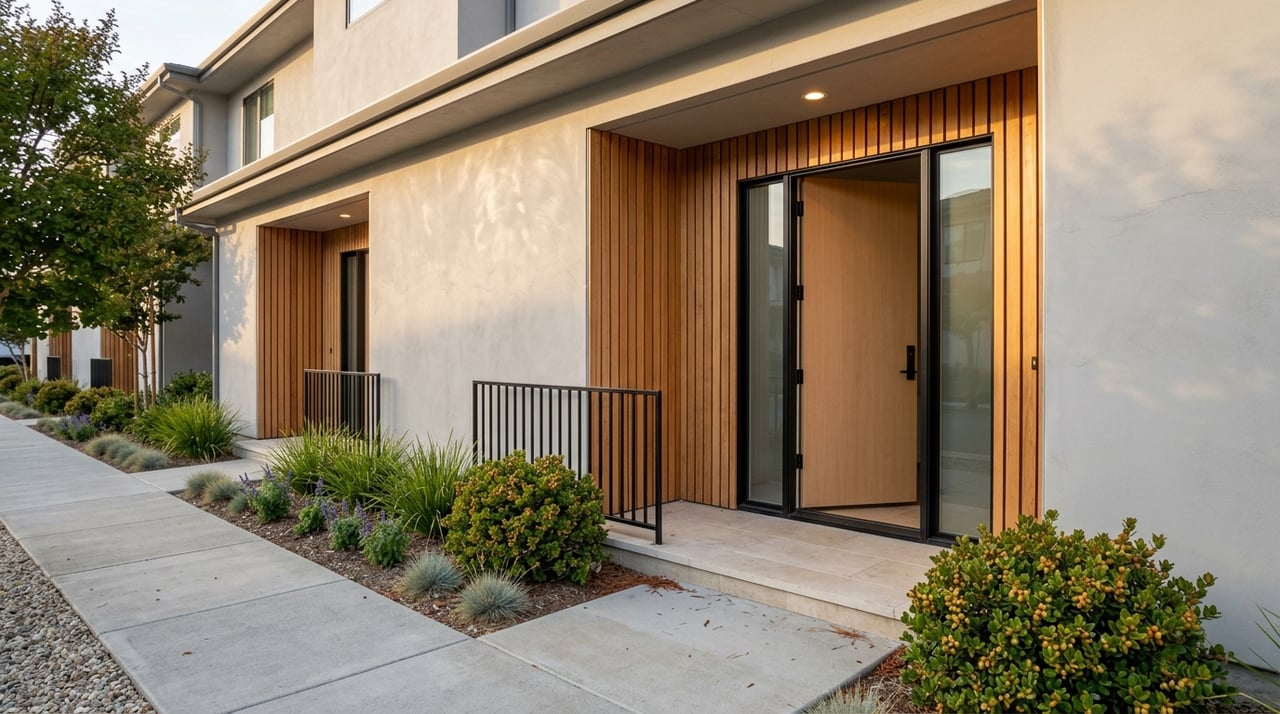
If you want a Los Altos address but a detached home feels out of reach, condos and townhomes deserve a closer look. In a market where prices move fast and inventory stays tight, attached homes can offer a more practical way to buy into the community without giving up location or quality of life. The key is knowing what you are really buying, what trade-offs come with it, and how to evaluate each opportunity with care. Let’s dive in.
Why attached homes matter in Los Altos
Los Altos remains one of the most expensive housing markets in the region. Redfin reports a median sale price of $4,247,458 for all home types over the three months ending May 2026, with 103 homes sold in May and a median of 10 days on market.
That backdrop helps explain why condos and townhomes can be a smart entry strategy. Current Redfin inventory shows 21 condos at a median listing price of $1.45 million and 14 townhouses at a median listing price of $2.3 million. These numbers are not a perfect apples-to-apples comparison because one is based on sales and the others are based on listings, but they still show a much lower relative entry point than many detached homes in Los Altos.
For many buyers, that difference creates options. Instead of waiting on the sidelines, you may be able to enter the market sooner, stay close to the lifestyle you want, and build your next move from there.
What condos look like locally
Los Altos condos often appeal to buyers who want a smaller footprint with a central location. Current listings include homes on El Camino Real, West Edith Avenue, 2nd Street, and First Street, with examples ranging from about 846 square feet for a one-bedroom, one-bath unit to about 1,470 square feet for a three-bedroom, two-bath unit.
Many of these homes are in communities with amenities that support convenience. Features in current listings include private patios, underground parking, storage, pools, and spas.
That matters if your goal is simplicity. You may find a home that lets you stay in Los Altos while reducing the day-to-day maintenance that often comes with a larger property.
How townhomes compare
Townhomes in Los Altos often feel closer to compact single-family living. Current inventory includes both older and newer options, from a 1973 community with a pool to newer construction just a few blocks from downtown Los Altos and in the heart of downtown.
Examples currently on the market range from about 1,345 to 1,785 square feet. Many offer two to three bedrooms, private outdoor space, and attached garages or parking.
If you want more separation, more square footage, or a more house-like layout, a townhome may be the better fit. In practice, these homes can offer a middle ground between a condo lifestyle and a detached home experience.
Why the legal structure matters
One of the most important details is not always visible during a showing. In California, the Department of Real Estate explains that subdivision type is defined by ownership rights, not by how a home looks.
A condominium means you own a separate unit plus an interest in common area through association membership. In a planned development, you own the home on a separate lot and also share ownership or use rights in common areas.
That means a home marketed as a townhome may legally be a condo, a planned development, or another form of common-interest ownership. This affects HOA obligations, project rules, and sometimes financing, so it is worth confirming early rather than assuming based on architecture alone.
The upside of a condo or townhome
For the right buyer, attached homes solve real problems. HOA budgets typically cover operating costs, reserves, administration, and maintenance for common areas, which can reduce the amount of exterior upkeep you personally manage.
That can be especially appealing if you are busy, travel often, or simply do not want the workload of a larger detached property. Many Los Altos listings also support this lifestyle with patios, gardens, pools, secure parking, and attached garages.
There is also a location advantage. Because Los Altos is only minimally walkable, with a Walk Score of 46, attached homes in downtown-adjacent or mixed-use settings may offer a more connected day-to-day experience than homes farther from central areas.
The trade-offs to weigh carefully
The lower entry price does not mean ownership is automatically simpler or cheaper over time. HOA dues are usually paid directly to the association and are not part of your regular mortgage payment.
Those dues can range from a few hundred dollars a month to more than $1,000 a month. On top of that, special assessments can happen when regular dues are not enough to cover major repairs or replacements.
You also need to be comfortable with rules. HOA documents, including CC&Rs and community rules, can govern design choices, amenity use, and other aspects of ownership.
In other words, you are not just buying the home itself. You are also buying into the way the community is managed.
Due diligence matters more here
In a condo or townhome purchase, the HOA packet is not just paperwork. It is one of the most important parts of your decision.
California Civil Code 4525 requires sellers in a common-interest development to provide a prospective buyer with governing documents and information about current regular and special assessments, unpaid fees, fines, and related items before closing. The California Department of Real Estate also recommends understanding the HOA’s articles, bylaws, CC&Rs, rules, budget, reserves, and enforcement powers.
This is where a smart entry strategy becomes a disciplined one. Before you remove contingencies, take time to review how the community functions, what it charges, how well it plans for future repairs, and whether the rules fit your lifestyle and long-term goals.
Financing can vary by project
Two attached homes with similar prices can have very different financing paths. That is because lenders may also evaluate project-level details, not just your personal qualifications.
Fannie Mae condo project standards look at items such as master property insurance, reserve funding, and occupancy levels in certain loan scenarios. A project that looks attractive at first glance may still create delays or limitations depending on how it is structured and managed.
A practical move is to ask your lender early whether a specific project is eligible. That conversation can save time, reduce surprises, and help you compare homes with a clearer understanding of the full picture.
Who this strategy can work well for
A condo or townhome can make sense if your top priority is staying in Los Altos and you are willing to trade lot size and some control for convenience and location. For first-time buyers in this market, that can be a meaningful way to get started.
It can also work well if you are downsizing but want to remain in the community. A smaller home with shared upkeep may preserve the lifestyle you value while simplifying day-to-day ownership.
For portfolio-minded buyers, attached homes can also be part of a longer-term plan. Still, any future rental or investment strategy should be checked against HOA rules, lender requirements, and project restrictions before you rely on that outcome.
Why supply may stay limited
Los Altos housing policy suggests attached homes will remain important, but still limited, within the city’s housing mix. The city’s Housing Element states that Los Altos has a Regional Housing Needs Allocation of 1,958 units for 2023 through 2031 and notes that mixed-use sites must be rezoned to allow more housing, including apartments and condominiums.
The city’s zoning map also includes multiple-family districts, a Commercial Downtown/Multiple-Family district, Planned Community, and Planned Unit Development zoning. At the same time, attached housing remains geographically constrained, which helps explain why these homes can be both scarce and expensive by national standards.
For you as a buyer, that means good opportunities may not last long. It also means that understanding the micro-market for attached homes in Los Altos can be just as important as understanding the broader citywide market.
A smart way to approach your search
If you are considering condos or townhomes in Los Altos, it helps to think beyond the list price. The most useful comparison is not just what home is cheapest today, but which one best fits your budget, lifestyle, and long-term plan.
As you compare options, focus on:
- Monthly HOA dues
- Recent or possible special assessments
- Legal ownership structure
- Community rules and restrictions
- Reserve funding and overall HOA health
- Project eligibility with your lender
- Location relative to downtown or daily routines
- Outdoor space, parking, and storage
This is where strategy matters. The right attached home can be a strong entry point, but the best choice is usually the one that balances lifestyle and financial clarity, not just square footage.
If you want a thoughtful plan for buying in Los Altos, Renee Burnette offers clear, local guidance to help you evaluate your options and move forward with confidence.
FAQs
What makes condos and townhomes a smart entry strategy in Los Altos?
- Condos and townhomes often have lower listing prices than many detached homes in Los Altos, which can make it easier to enter the market while staying in the community.
What is the difference between a Los Altos condo and a Los Altos townhome?
- A condo and a townhome may look different, but the legal form matters most because ownership rights, common areas, HOA obligations, and financing can vary by project.
What should you review before buying a condo or townhome in Los Altos?
- You should review the HOA documents, including assessments, rules, budget, reserves, bylaws, and CC&Rs, before removing contingencies.
Can HOA dues affect the cost of owning a Los Altos attached home?
- Yes, HOA dues are a separate ownership cost and can add a significant monthly expense, and some communities may also have special assessments.
Why should you ask a lender about project eligibility early?
- Some condo and townhome projects have financing factors tied to insurance, reserves, or occupancy, so early lender review can help you avoid delays or surprises.
